HOW AN AD BECAME A SYMBOL OF SPAIN
How a roadside ad for brandy became one of Spain’s most recognisable cultural icons.
By Kristina Kalashnikova
04 min read

The strange story of the Osborne bull
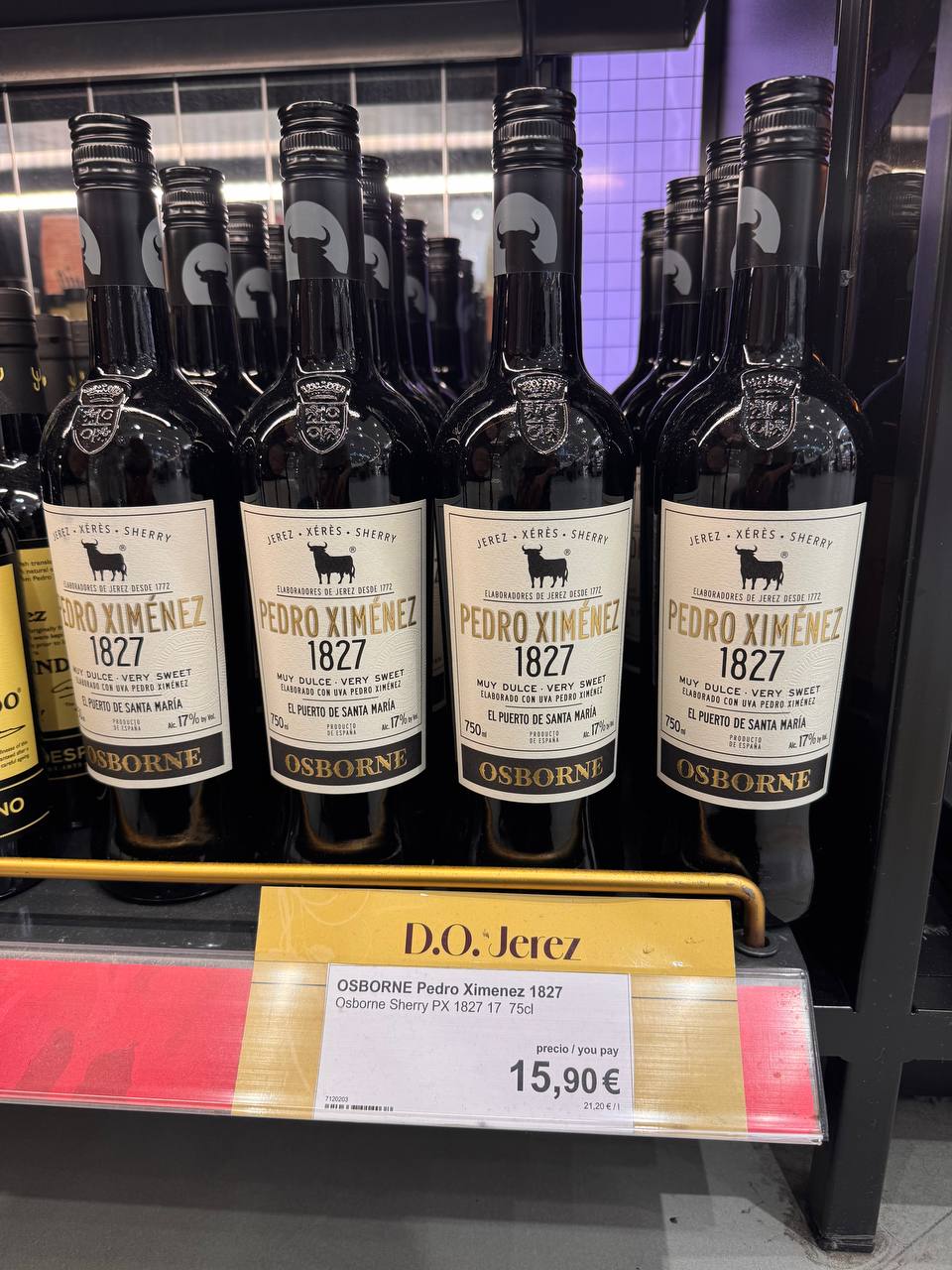
A bottle of sherry in duty free reminded us of a rather good Spanish story.
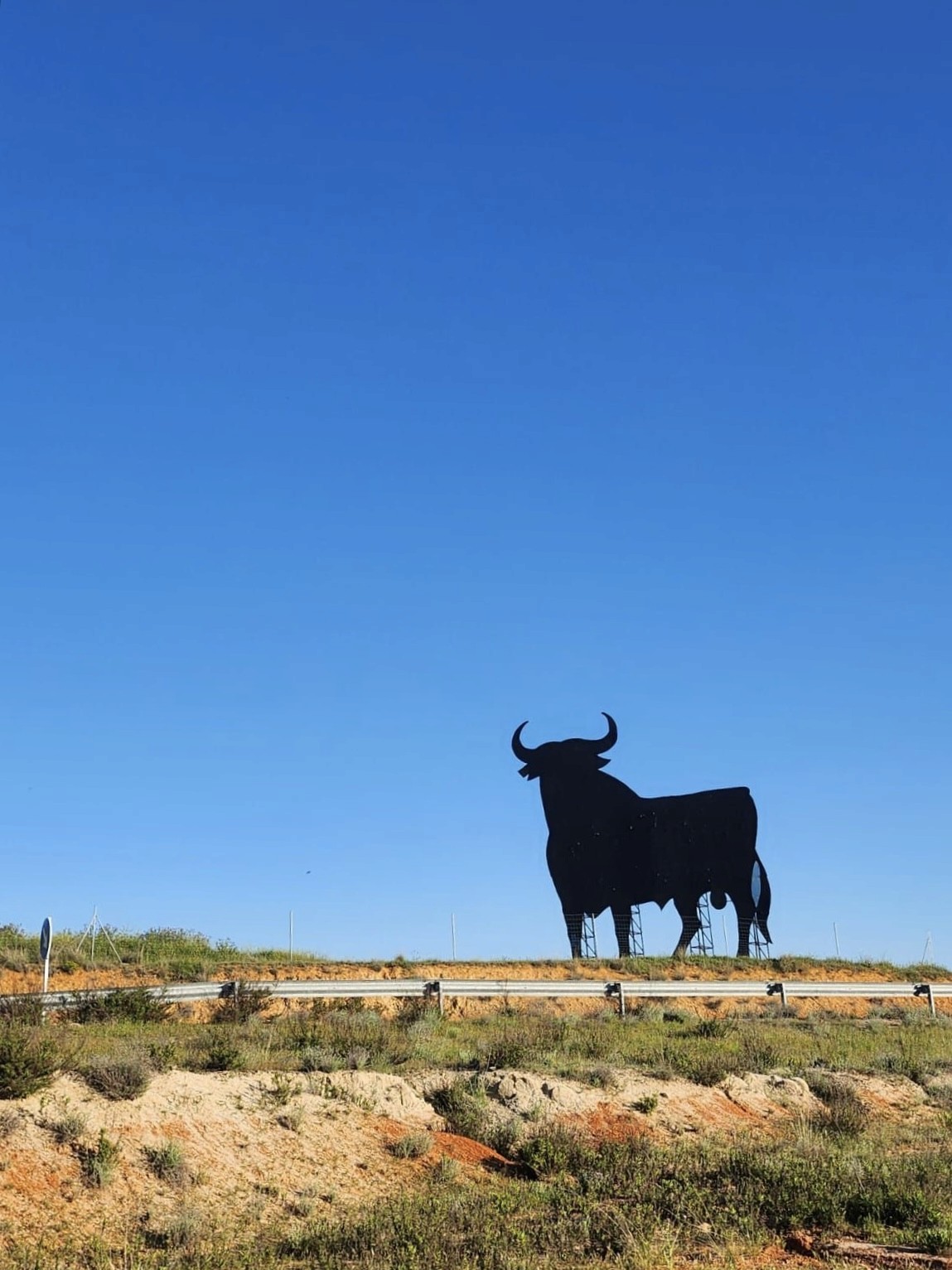
If you’ve ever driven across Spain, there’s a good chance you’ve come across one of its stranger roadside sights.
Somewhere between Madrid and Andalusia, high on a hill, a huge black bull suddenly appears.
It stands above the road, looking into the distance, with the kind of confidence that makes you assume it has been watching over Spain for centuries.
It hasn’t.
The bull isn’t even a hundred years old.
And the best part of the story is that it didn’t begin with national identity, bullfighting or any grand plan to create a symbol of Spain.
It began with an alcohol advertisement.
In 1956, Spanish drinks company Osborne commissioned the advertising agency Azor to create an image for its Veterano brandy. Designer Manolo Prieto came back with the silhouette of a black fighting bull.
Osborne wasn’t immediately convinced. Apparently, the company thought the design looked a little too much like something belonging to a livestock business.
Prieto insisted.
Luckily, they listened.
The first bull appeared beside the Madrid–Burgos road in 1957. Back then, it was made of wood, stood only around four metres tall and carried the words Veterano Osborne across its body.
Then the bulls began multiplying.
At one point, there were more than 500 of them across Spain.
And then something happened that occasionally happens to very good advertising: it became bigger than the product it was supposed to sell.
The wooden structures were gradually replaced with metal ones. By the early 1960s, the bulls had grown to around 14 metres tall and moved onto hillsides, where they could be seen from much further away.
Then, in 1988, Spain introduced restrictions on roadside advertising along state roads.
This is where the story gets interesting.
The Osborne lettering came off.
The bulls stayed.
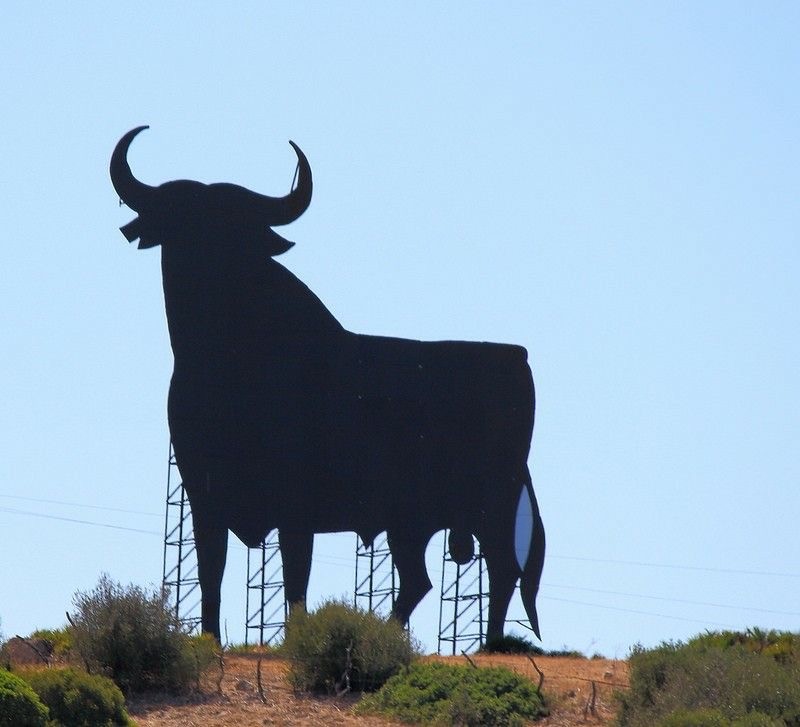
By then, they weren’t really billboards anymore. They had become part of the landscape — so much so that attempts to remove them completely triggered public opposition.
In 1997, Spain’s Supreme Court ruled that the bulls could remain, citing their aesthetic and cultural significance.
A piece of advertising had somehow turned into one of the country’s most recognisable visual symbols.
Which brings us back to that bottle in duty free.
Pedro Ximénez 1827, a sweet sherry by Osborne, still carries the same black bull on its label - the one originally created to sell an entirely different drink.
There’s probably a branding lesson somewhere in there.
They wanted to sell brandy.
Instead, they accidentally gave Spain an icon.
So the next time you’re driving through Spain and spot that black silhouette standing alone on a hill, don’t assume it was put there for tourists.
It’s simply still doing its job.
Almost seventy years later.
By Kristina Kalashnikova
Telegram - @budte_lubezny
Article Tags
Branding, Advertising, Design, Spain, Cultural Icons, Osborne