What Does a Machine Dream About?
Eli Cortiñas’ new exhibition at Madrid’s Reina Sofía got us thinking about a slightly uncomfortable question: how much of our taste is actually ours?
By Maria Pri
05 min read
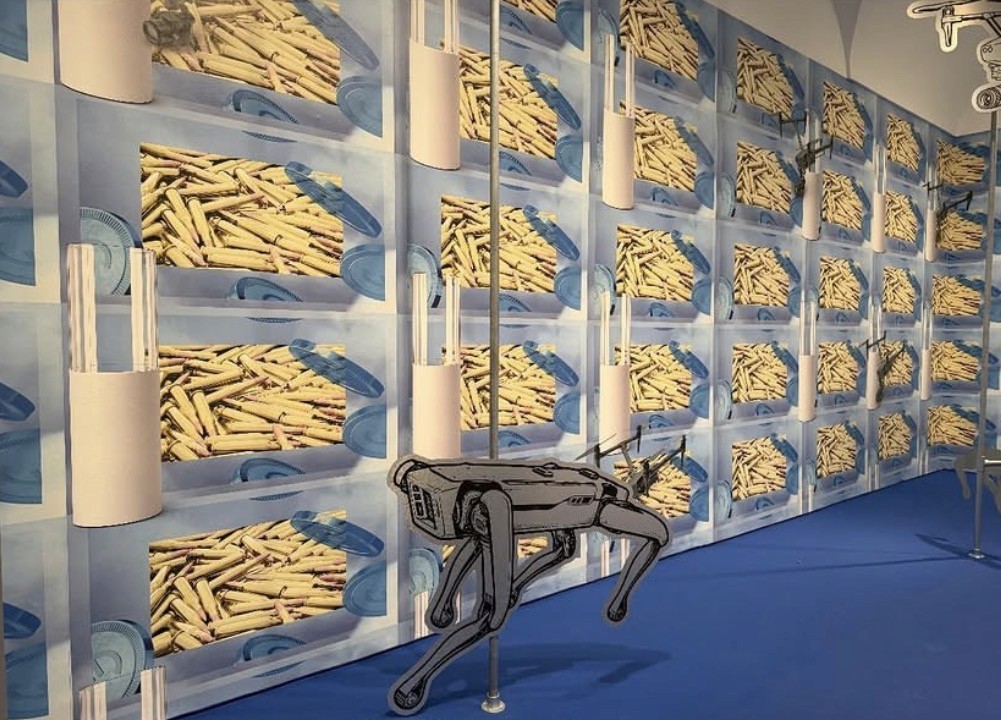
Eli Cortiñas, The Machine Dreams of Smoke, at Museo Reina Sofía in Madrid.
Eli Cortiñas’ new exhibition at Madrid’s Reina Sofía is about images, cinema and technology. But it also made us think about something much more ordinary: when did our feeds start deciding what we like?
I was looking through the new exhibitions in Madrid when I found one with a title that immediately got me: The Machine Dreams of Smoke.
It opened at the Reina Sofía on September 23 and is by Eli Cortiñas, a Cuban-German artist whose work often takes existing images; from cinema, advertising, archives and popular culture and pulls them apart to look at what they are actually telling us.
The exhibition itself deals with some fairly big subjects: cinema, museums, technology, power, the way images produce knowledge. But reading about it made me think about a much smaller and slightly annoying question.
How much of what I like did I actually find myself?
Because I genuinely cannot remember the last time I discovered something online without an algorithm being involved somewhere.
A restaurant appears on Instagram. Then Pinterest shows me an interior that looks suspiciously similar. Three girls on my feed are suddenly wearing the same kind of shoe. Spotify decides I need a certain artist. A week later I am saving all of it.
None of this feels particularly sinister while it is happening. Mostly, it is convenient.
But it does make taste a little weird.
Did you like it first?
Algorithms supposedly learn what we like. That is the deal.
You watch one video until the end, save one dress, listen to one song twice, and the system gets slightly better at predicting the next thing you might want.
The problem is that prediction eventually starts looking a lot like influence.
If I like one thing and you show me twenty versions of it, obviously I am going to become more familiar with that aesthetic. Maybe I start liking it more. Maybe I buy it. The algorithm then reads that as proof that it understood me correctly and gives me another twenty.
At some point it becomes a chicken-and-egg situation for personal taste.
Did everyone independently decide that they wanted the same tiny sunglasses, chrome furniture, butter-yellow kitchens or ballet flats?
Maybe.
But probably not entirely.
And this is where Cortiñas’ exhibition gets interesting.
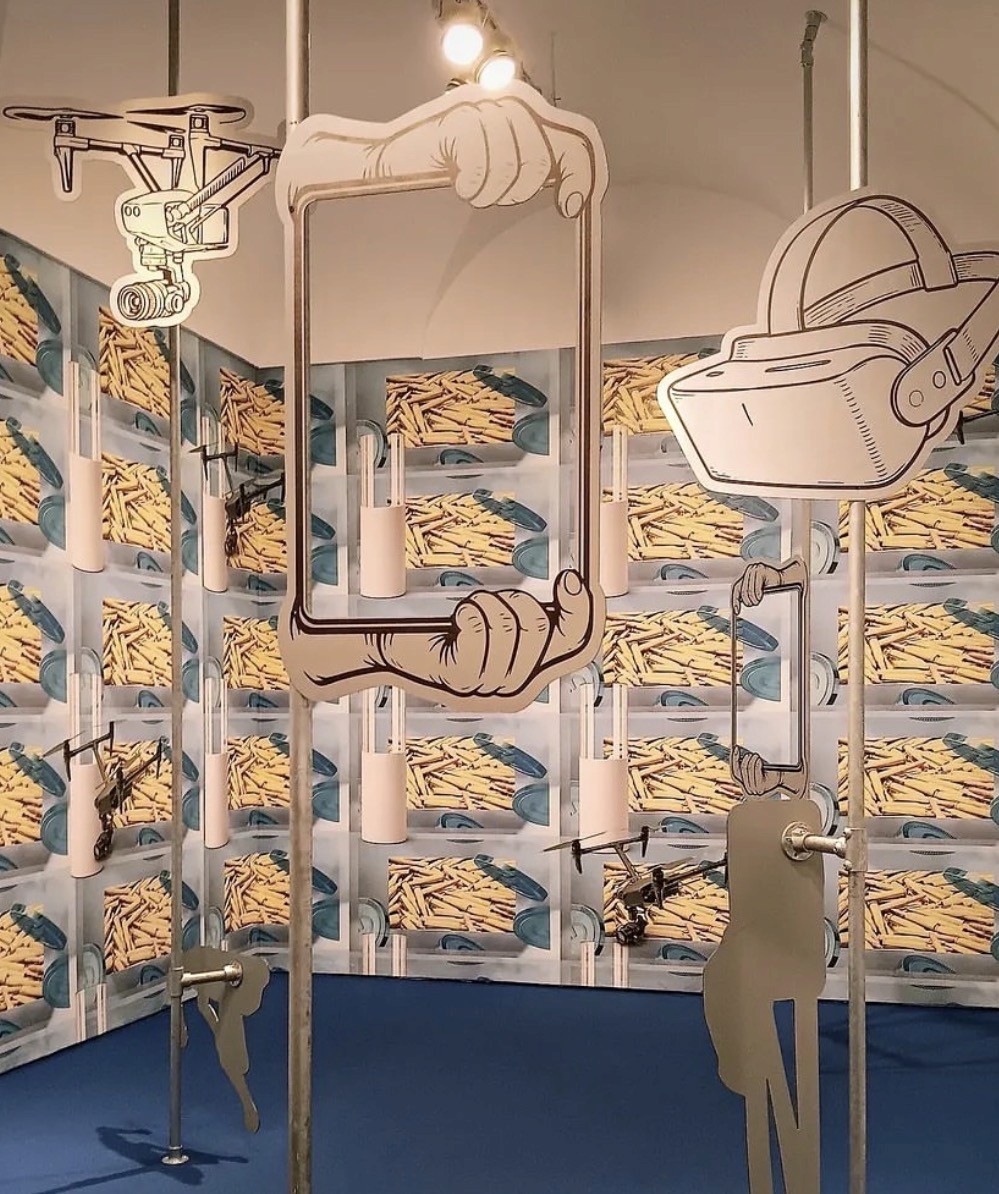
Her work is not only about Instagram deciding what shoes you buy. She is interested in a much longer history of images and the institutions that organise them: cinema, archives and museums as well as contemporary digital systems. The Machine Dreams of Smoke expands on her 2016 work The Most Given of Givens, now part of the Reina Sofía collection, and questions the idea that the systems presenting images to us are somehow neutral.
Because somebody - or something - is always choosing the frame.
This did not start with TikTok
It would be easy to blame everything on algorithms, but humans have been deciding what other humans should look at for a very long time.
Editors did it. Film directors did it. Museums still do it.
Put an artwork in a major museum and suddenly it carries a different kind of authority. Place another one in storage and most people may never know it exists. A director decides what stays inside a shot. A magazine decides what gets the cover.
There has never really been a completely neutral way of looking.
What feels different now is the scale and the intimacy of it.
A museum curator does not follow you around all day noting which painting you looked at for 2.7 seconds longer.
Your phone basically can.
And instead of one editor deciding what millions of readers see, millions of slightly different feeds are being assembled around individual people.
That is amazing technology.
It is also a very strange way to develop taste.
The internet is getting very good at looking like itself
You notice it most when you travel.
You can walk into a café in London, Madrid, Copenhagen or New York and somehow find the same steel counter, the same little lamp, the same typeface and a drink involving matcha.
None of those things are bad. I like half of them.
That is almost the problem.
Online aesthetics move incredibly quickly because we are all looking at each other. A reference travels from a designer to Pinterest to a brand to TikTok to another designer, until eventually it is difficult to remember where it came from.
Everything gets very good-looking.
And occasionally very boring.
The internet has made finding beautiful things ridiculously easy. But discovery is different from recommendation.
Recommendation starts with what you already like.
Real discovery sometimes starts with something you absolutely do not.
Maybe taste needs bad recommendations
This might be my favourite thought to come out of the exhibition.
Perhaps developing taste requires occasionally seeing the wrong thing.
A film you would never choose from the thumbnail. A painting you initially think is ugly. Music your friend puts on that Spotify would never have connected to you. A tiny gallery you walked into because it started raining.
Some of the things I love most would have been impossible for me to search for before I knew they existed.
And that feels increasingly valuable.
There is nothing wrong with an algorithm knowing that I will probably like a certain restaurant. Please, actually, keep sending me good restaurants.
But maybe we should be a little suspicious when everything we see begins to look exactly like us.
Because good taste is probably not having a perfectly curated feed of things you already know you like.
It is having enough curiosity to occasionally click on the thing you don’t.
Eli Cortiñas: The Machine Dreams of Smoke is at Museo Reina Sofía in Madrid from September 23, 2026 to March 8, 2027.
Article Tags
Eli Cortiñas, Reina Sofía, Madrid, Art, Digital Culture, Algorithms, Visual Culture, Technology