Dressed to Go Somewhere
At Palais Galliera, masculine dress codes appear in silk jackets, cycling clothes and a cartoon that needs labels to tell its subjects apart.
By Maria Pri
06 min read
Dressed to Go Somewhere: Wardrobe of One’s Own: Dissident Femininities in the 19th Century. Palais Galliera
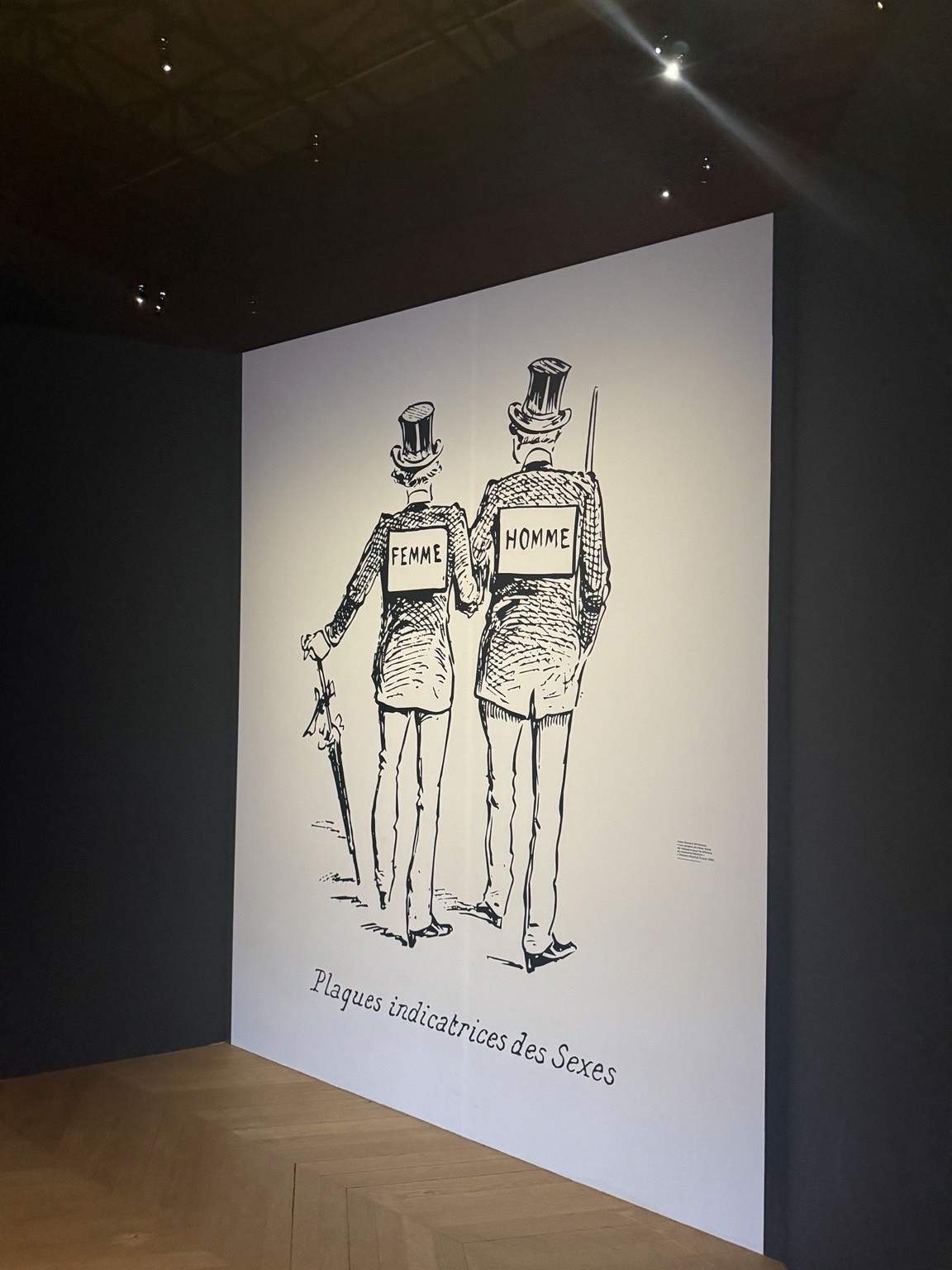
Two figures walk arm in arm, seen from behind, in top hats, fitted coats and trousers. Their clothes are so similar that the cartoon supplies signs on their backs: “Femme” and “Homme”. Enlarged on a wall at Palais Galliera, the image makes its joke easy to read. It also suggests an anxiety: what happens when clothes stop reliably telling people who is who?
That question runs through A Wardrobe of One’s Own: Dissident Femininities in the 19th Century. The exhibition examines women’s adoption of masculine dress codes, placing clothes within a wider negotiation over how women could live and present themselves. Its scope extends across France and the English-speaking world, with Rosa Bonheur’s wardrobe among its central exhibits.
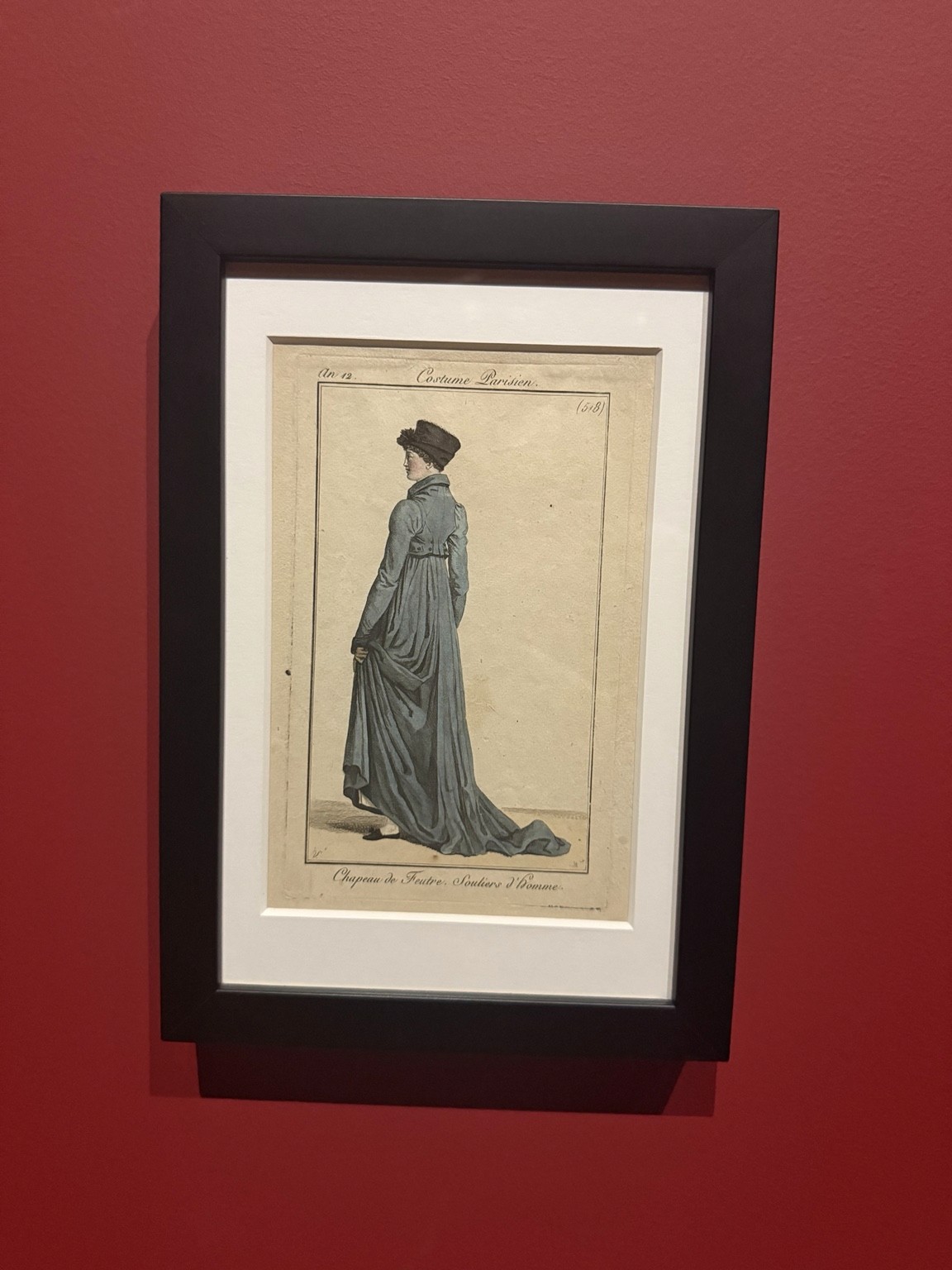
Some of the most revealing details are easy to miss. In a Costume parisien fashion plate dated 1803–1804, a woman wears a long blue-grey garment and a dark hat. The caption specifies men’s shoes. The borrowing happens at her feet, beneath a silhouette we might otherwise read without a second thought. A small detail changes how we see the whole outfit.
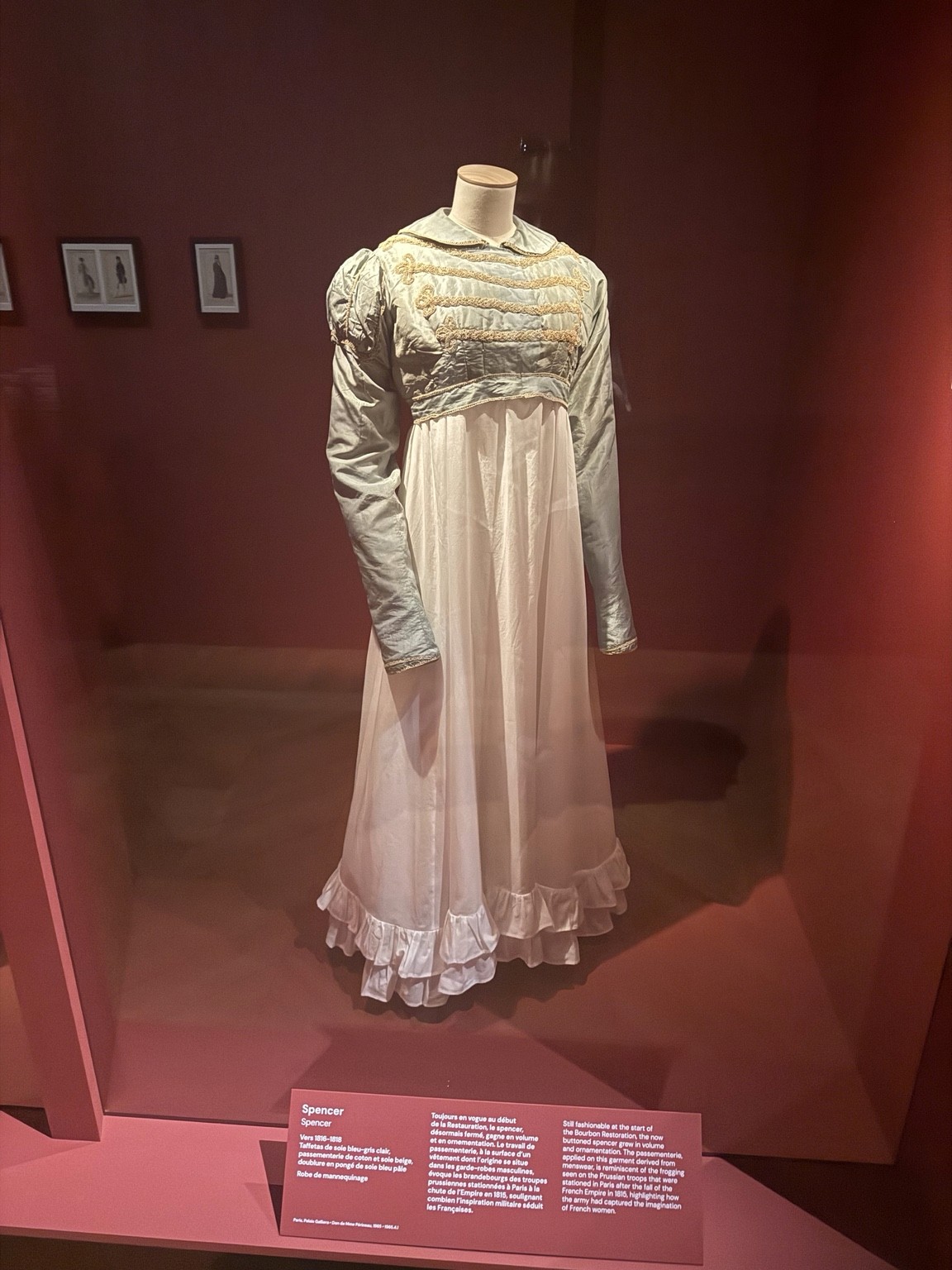
A blue-grey silk spencer from around 1815–1818 tells another part of the story. Displayed over a white dress, the short jacket has rows of decorative braid across its chest. The museum’s label connects that ornament to the uniforms of Prussian troops stationed in Paris after the fall of the Empire in 1815. Military references could enter a woman’s wardrobe through decoration, without requiring her to adopt an entire uniform. The resulting combination is delicate and remarkably assured.

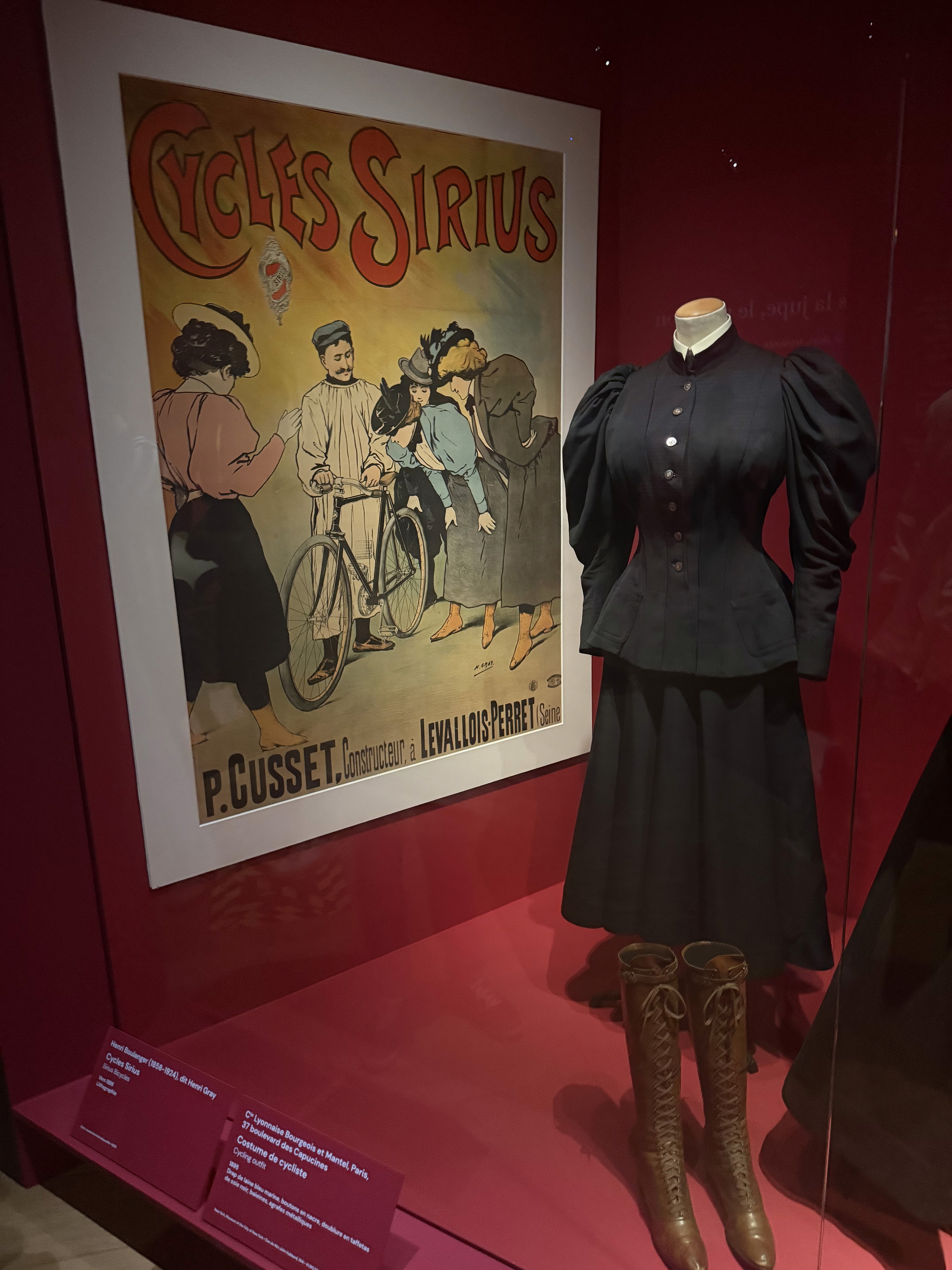
Then there is the cycling jacket, 1895–1900. Its sleeves are magnificent: gathered high at the shoulder and tapering towards the wrist, they frame broad lapels and two rows of buttons. A pale tie sits neatly at the throat. There is something wonderful about an outfit this considered being made for a bicycle ride.
The cycling jacket makes that history tangible. Its tailoring brings together a tie and prominent lapels with a sharply shaped waist and generous sleeves. Familiar ideas of masculine and feminine dress occupy the same garment. Looking at it, a straightforward story in which women simply discarded one silhouette for another begins to feel inadequate. Change could happen within an outfit, detail by detail.
Nearby, a dark cycling ensemble appears alongside a brightly coloured Cycles Sirius poster. The combination brings clothing back into the world of activities and things people might buy. A bicycle needs a rider; a rider needs something to wear. Seen together, the clothes and advertisement invite us to consider how a new pastime could become a question of appearance, too.
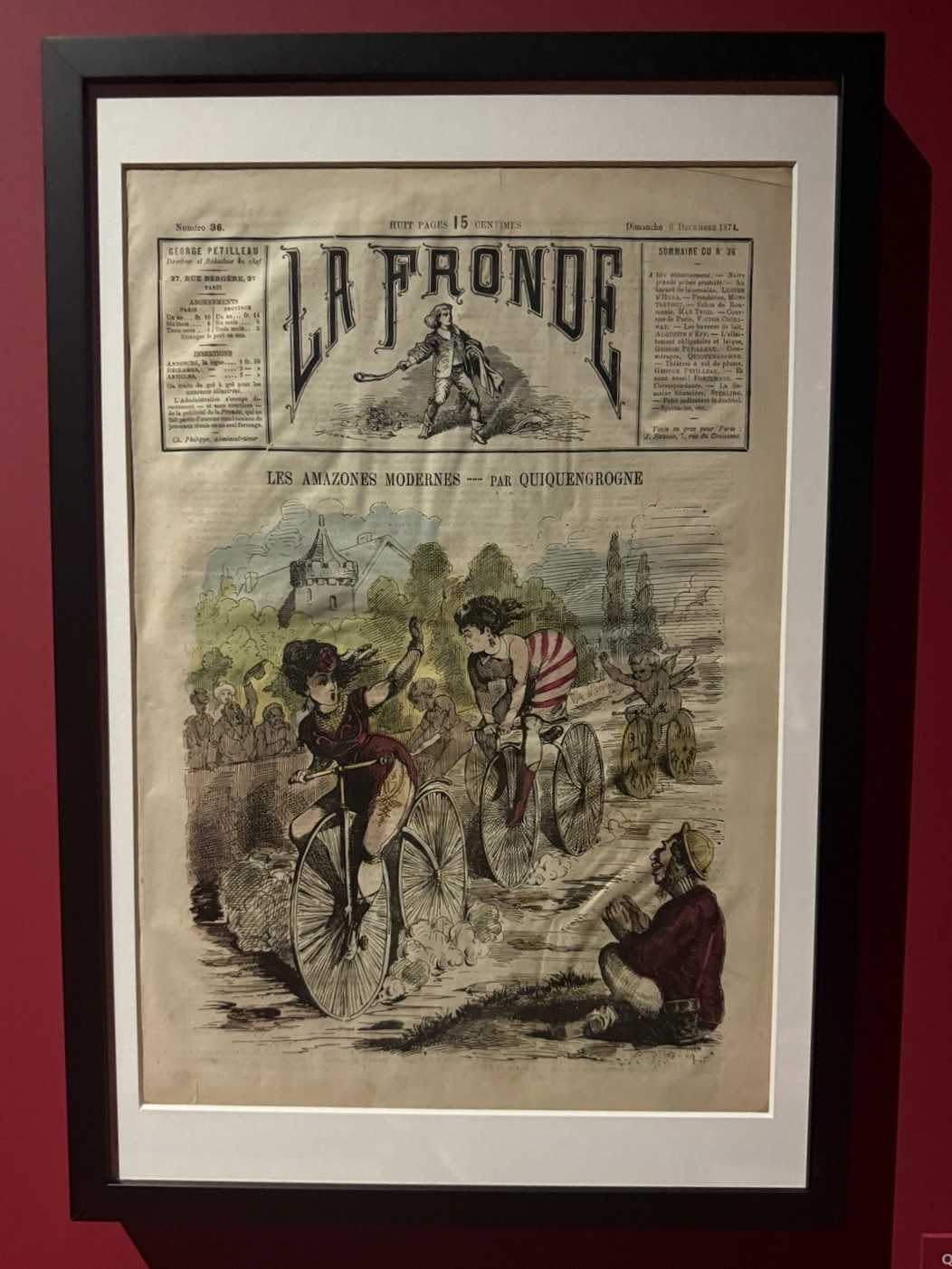
There is humour here, although it has an edge. Quiquengrogne’s Les Amazones modernes, published in La Fronde on 6 December 1874, depicts women on bicycles, their movement turned into a public spectacle. The image makes a revealing companion to the garments. In the display case, we can study a jacket’s construction. In the illustration, we see women being watched. Getting dressed and being interpreted by other people are rarely separate experiences.

A travelling ensemble by Mme Siebenmann, dated around 1898, deserves a long look of its own. Green and yellow lines run across dark tartan, with fringe following the edges of the upper layers and skirt. It is expressive, coordinated and rather dramatic. The label’s simple description, “travelling ensemble”, gives all that visual pleasure a destination. These were clothes conceived for going somewhere.
That distinction matters. It would be easy to look at the tailoring and extract a few styling ideas: the high collar, the waistcoat, the tie. They are certainly there. But the objects become more interesting when we keep their uses in view. What would someone do in this jacket? What did she need her clothes to allow? And what would other people assume when they saw her?
The exhibition leaves room for those questions. Looking back at the cycling jacket, its elaborate sleeves feel less like a contradiction. A woman could want movement and still care very much about the shape of her shoulders. Wanting a different life did not require losing an interest in clothes.

A Wardrobe of One’s Own: Dissident Femininities in the 19th Century is at Palais Galliera, Paris, from 26 September 2026 to 14 February 2027.
Glow After · Paris notes
Editorial sources and image notes:
Palais Galliera, official exhibition page: https://www.palaisgalliera.paris.fr/en/exhibitions/wardrobe-ones-own-dissident-femininities-19th-century
Instagram: @palaisgallieramuseedelamode
Photo credit: Maria Priymachenko
Article Tags
Fashion, Culture, Paris, History, Exhibitions