Inside Museum Van Loon: How Amsterdam’s Wealthiest Families Lived
A 17th-century mansion, a remarkable wedding gift and a family with ties to Dutch royalty. Inside one of Amsterdam’s most fascinating historic homes.
by Maria Pri
04 min read
© Glow After
Walking along Amsterdam’s Keizersgracht, you probably wouldn’t guess that one of the houses hides an entire world of aristocratic life.
Built in 1672, Museum Van Loon was originally home to Ferdinand Bol, a successful painter and former student of Rembrandt. He was also an art collector, owning works by artists such as Rembrandt and Rubens. So, long before the house became a museum, it was already filled with art.
The house later became associated with the Van Loon family, one of Amsterdam’s most influential families. In 1884, Hendrik van Loon gave the mansion to his son Willem Hendrik as a wedding present. Quite a wedding gift.
Willem Hendrik was a banker, while his wife Thora served at the court of Queen Wilhelmina. The family had been part of Amsterdam’s elite for generations, with their history going back to Willem van Loon, one of the founders of the Dutch East India Company in 1602.
Of course, there is another side to this history. The family’s wealth was also connected to Dutch colonial trade and slavery, something the museum now explores as part of its story.
What I find most interesting about Museum Van Loon is that it doesn’t really feel like a museum. It feels like walking through someone’s home, only that someone happened to be incredibly wealthy a few centuries ago.
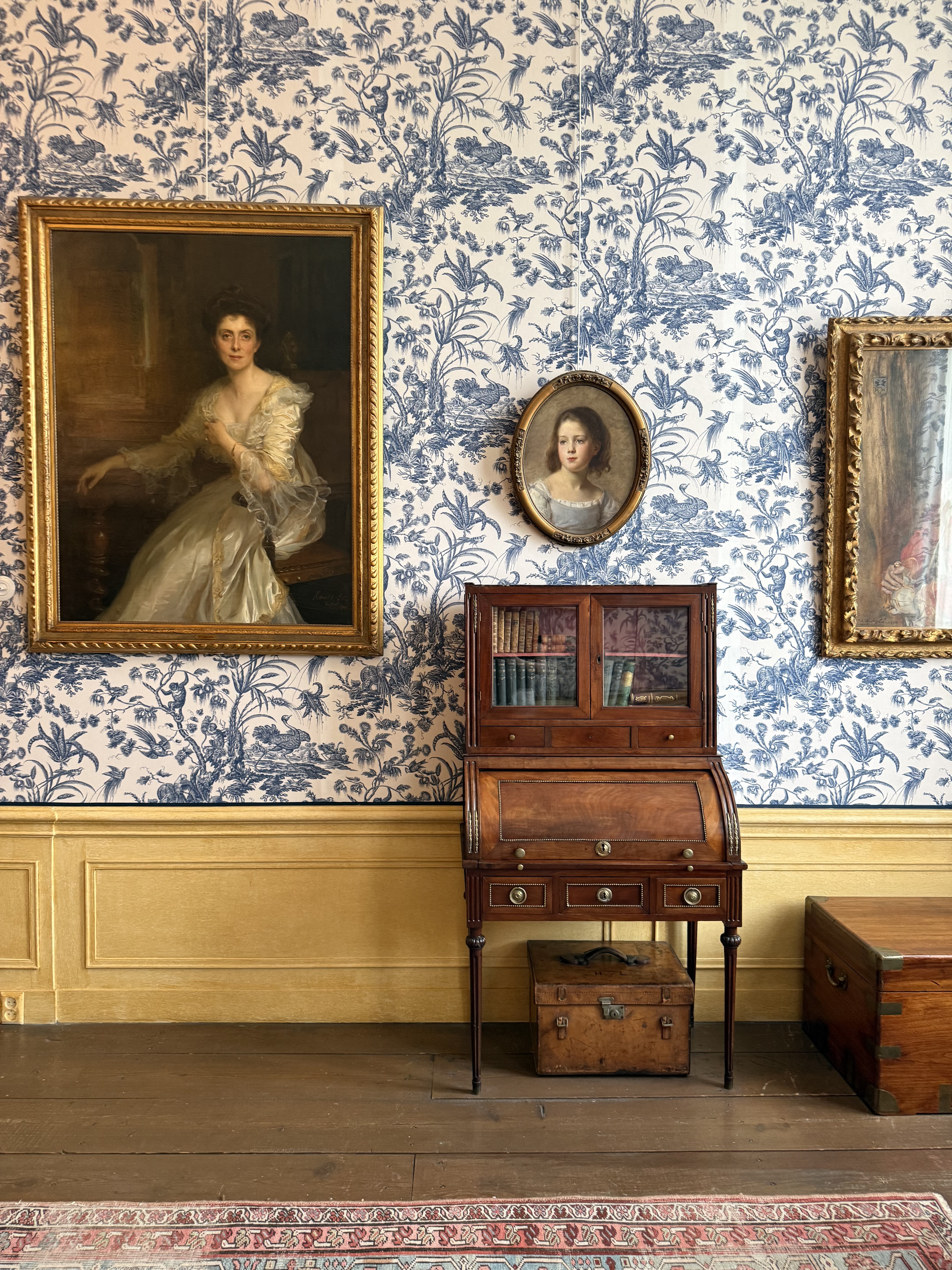
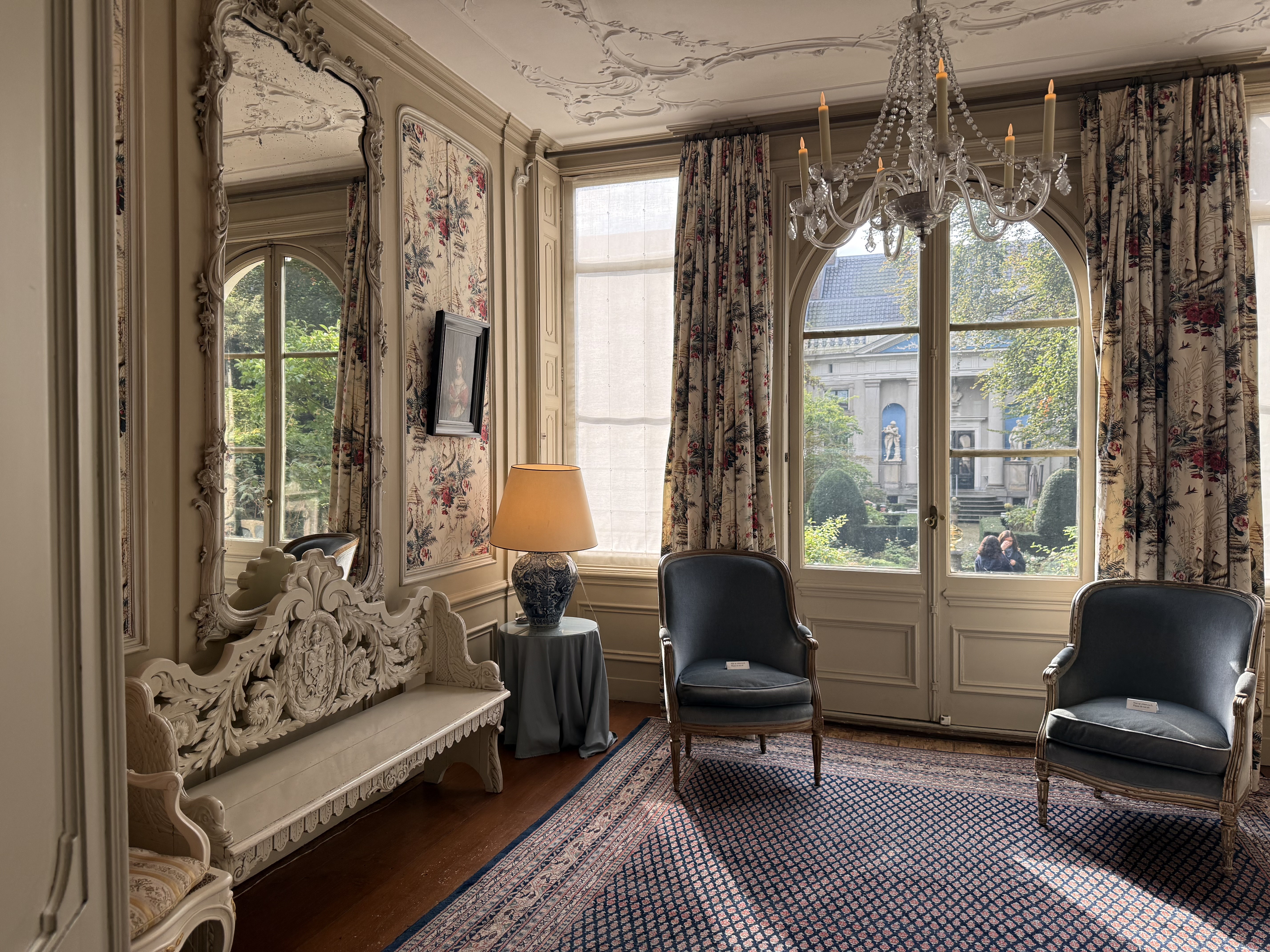
The rooms are filled with family portraits, antique furniture, chandeliers and beautiful little details. One of my favourites was the red room, with its colourful carpet, gold-framed portraits and peacocks displayed above the fireplace.
But the contrast between the rooms is probably even more interesting. Upstairs, you have these beautiful reception rooms where the family would entertain guests. Downstairs, there is an old kitchen with copper pots, blue-and-white tiles and a huge cooking range, where the household staff prepared everything.

It gives you a much better idea of how people actually lived here, rather than just showing you what they owned.
Behind the mansion is another little surprise: a formal garden, hidden between the buildings, with a former coach house at the other end. It’s particularly beautiful because you wouldn’t expect to find such a peaceful space in the middle of Amsterdam.
The house was opened to the public in 1973, and much of its historic character has been preserved.
Amsterdam has plenty of famous museums, but Museum Van Loon offers something a little different. Instead of looking at paintings in a gallery, you’re walking through the rooms where generations of people actually lived.
And sometimes, that’s a much more interesting way to discover a city’s history.
Museum Van Loon
Keizersgracht 672, Amsterdam
Photography by Glow After
Article Tags
Amsterdam, Museum Van Loon, Art, Culture, Architecture, History, Interiors