The Art of Becoming Yourself: Who Are You, Really?
On self-concept, the people we think we are, the people we pretend to be, and the ones we haven't met yet.
Glow After Editorial
15 min read

There is a version of you that exists entirely in your head.
It has a personality, a history, a certain way of behaving. It knows what it’s good at, what it would never do, and what kind of life it deserves. It probably has a few insecurities, some very specific ambitions, and an idea of how other people see it.

You might think of yourself as shy, ambitious, independent, creative, or simply not the kind of person who would ever do that.
But where did these ideas come from? And more importantly, how many of them are actually true?
Think about it. You might be completely different around your family than you are with your friends. Confident in one city and awkward in another. Someone who barely speaks in a classroom might have no problem walking into a party full of strangers.
It’s still the same person. So why do they suddenly seem to have a different personality?
Psychologists have spent more than a century studying questions like these. One of the concepts at the centre of this research is known as self-concept — the way we understand, describe and evaluate ourselves.
And it turns out that the person we believe ourselves to be can influence everything from the relationships we pursue to the opportunities we think we’re capable of taking.
So, what exactly is self-concept?
Self-concept is essentially the collection of beliefs we have about ourselves.
Some are straightforward: our age, nationality, profession, interests. Others are more subjective. We might consider ourselves attractive, intelligent, difficult to love, socially awkward, naturally talented or destined for something extraordinary.
These beliefs don’t necessarily describe us objectively. They describe how we perceive ourselves.
That distinction matters.
A person can be talented and genuinely believe they aren’t. Someone can be perfectly capable of speaking in public yet remain convinced they’re terrible at it because of one embarrassing experience years ago.
Our self-concept isn’t always accurate, but it can still influence how we behave.

American psychologist and philosopher William James laid important foundations for studying the self in his 1890 book The Principles of Psychology. He distinguished between the I, the self that experiences and observes, and the Me, the self that can become an object of our own thoughts.
Put simply, there is the person living your life and the person you think you are.
Later, psychologists including Carl Rogers and Robert Burns explored how these perceptions develop and how they relate to our emotions and behaviour.
One influential way of understanding self-concept involves three interconnected elements: what we believe about ourselves, how we evaluate those beliefs, and how they may influence our actions.

For example, someone believes they’re bad at making friends. They feel embarrassed about it, so they avoid social situations. Because they rarely meet new people, they have fewer opportunities to discover that their original belief might be wrong.
The belief begins to reinforce itself.
But the reverse can happen, too. A new friendship, an unexpectedly successful conversation, or a different social environment might challenge that assumption.
This is what makes self-concept so interesting: it can feel like a fixed description of our personality while remaining open to change.
You’re not the only person who created your identity
Here’s a slightly uncomfortable thought: some of the things you believe about yourself may have started as somebody else’s opinion.
Perhaps your parents always described you as responsible. A teacher told you that you weren’t particularly artistic. Your friends decided you were the quiet one. Someone you dated made you feel desirable, or perhaps completely inadequate.
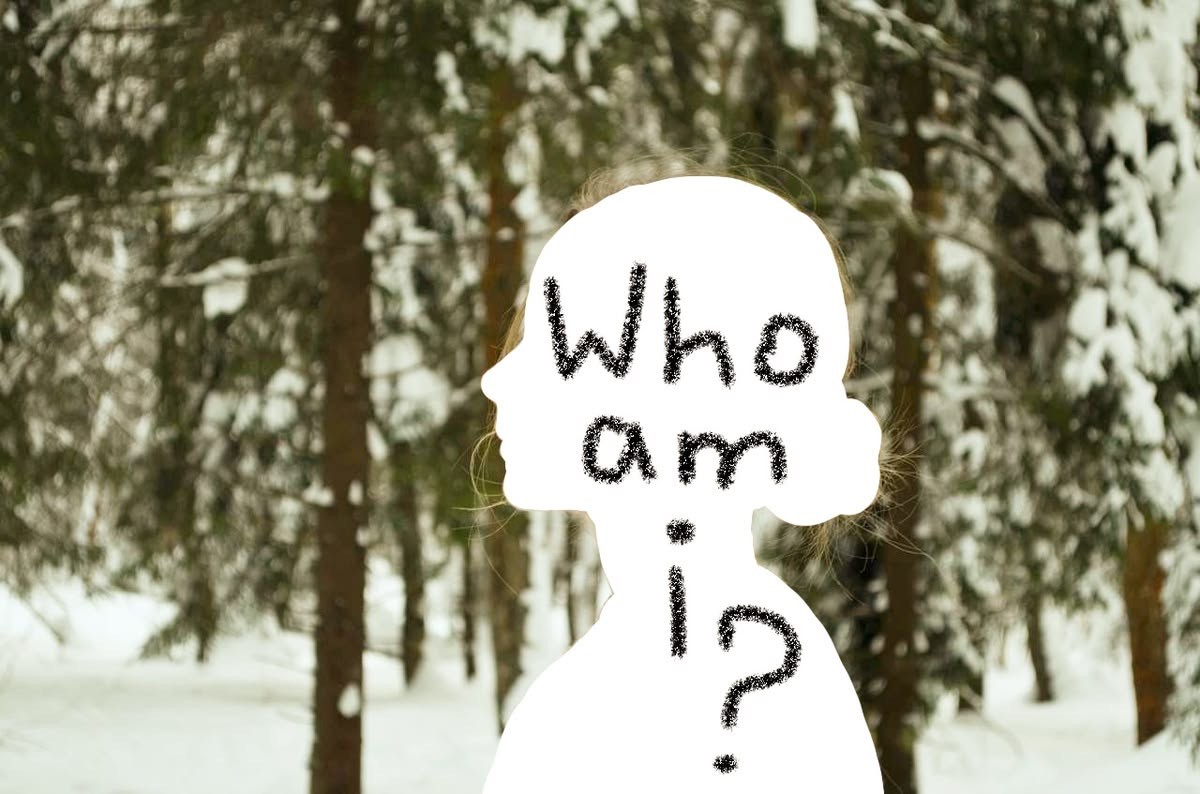
Over time, these descriptions can become so familiar that we stop questioning where they came from.
American sociologist Charles Horton Cooley explored this process through his concept of the looking-glass self, introduced in the early twentieth century.
His idea was that we develop part of our self-image through imagining how others see us, imagining their judgments, and responding emotionally to those perceived judgments.
The crucial detail? We don’t actually have to know what other people think. We only have to believe we know.
Someone looks at you across a restaurant. You immediately assume they’re judging your outfit. Maybe you feel uncomfortable and spend the next ten minutes wondering whether you look ridiculous.
Meanwhile, they might simply be wondering where you bought your jacket.
The interaction happened. The judgment might never have existed.
George Herbert Mead developed another influential social theory of the self, arguing that our ability to understand ourselves develops through interaction with other people and learning to take their perspectives.
In Mead’s account, the self includes the spontaneous, responding I and the socially informed Me, shaped by the attitudes and expectations we learn from others.

Neither theory suggests that we are merely copies of the people around us. But both challenge the idea that identity develops entirely from within.
We learn about ourselves partly through relationships, social expectations and the communities we belong to.
Which raises a question worth asking: how much of your personality is genuinely yours, and how much is something you’ve learned to be?
Maybe you don’t dislike public speaking. Maybe you were embarrassed once and decided it wasn’t for you.
Maybe you aren’t naturally reserved. Maybe you’ve spent years surrounded by people who expect you to be.
Not every self-belief is wrong, of course. But some deserve a second look.
The person you are, the person you want to be, and the person you think you should be
Almost everyone has an ideal version of themselves.
More confident. More successful. Better dressed. Better connected. Someone who speaks five languages, never wastes a morning, has an impressive career and somehow always knows exactly what to say.

There’s nothing wrong with having ambitions. But psychologists have been particularly interested in what happens when the person we imagine being doesn’t match the person we believe we are.
Carl Rogers examined the relationship between self-perception and the ideal self, emphasising the psychological importance of congruence, or consistency between our self-understanding and lived experience.
Psychologist E. Tory Higgins took this further in his 1987 paper Self-Discrepancy: A Theory Relating Self and Affect.
He distinguished between three important representations of the self:
Actual self: the qualities we believe we currently possess.
Ideal self: the qualities we hope or wish to possess.
Ought self: the qualities we believe we should possess because of duties, responsibilities or expectations.
Higgins proposed that different discrepancies between these representations are associated with different emotional experiences.
A gap between the actual and ideal self can be associated with disappointment and dissatisfaction. A gap between the actual and ought self can be associated with anxiety, tension and feelings of threat. His original work presented correlational and experimental evidence supporting important predictions of the theory.
Consider someone who dreams of working in fashion but studies something entirely different because it’s considered a safer or more respectable choice.

Their actual life may satisfy the expectations of their family while feeling increasingly distant from their personal ambitions.
Or imagine someone who has achieved almost everything they once wanted, yet remains convinced they should be doing more.
A prestigious university isn’t prestigious enough. A successful career isn’t successful enough. There’s always another person to compare themselves with, another milestone to reach.
The problem isn’t necessarily ambition itself. It’s that the standard against which the person evaluates their life keeps moving.
Understanding the difference between what we want and what we feel we should want can be surprisingly useful.
Because sometimes we’re not disappointed with our lives. We’re disappointed that they don’t resemble a particular image we’ve created.
Your future self isn’t just a fantasy
One of the most fascinating developments in self-concept research came in 1986, when psychologists Hazel Markus and Paula Nurius introduced the concept of possible selves.
Their research explored how people imagine who they might become, who they would like to become and who they fear becoming.
These imagined futures aren’t just daydreams. They can provide direction for motivation, influence how we evaluate ourselves and help organise our goals.

Think about someone who wants to become a musician.
Before releasing a song, performing onstage or signing a record deal, they may already imagine themselves as a musician. That imagined identity could encourage them to take lessons, practise regularly and pursue opportunities.
But there’s an important distinction between imagining a future and working towards it.
Visualising yourself as a successful artist won’t automatically make you one. The value of that possible identity depends partly on whether it helps guide real decisions.
And possible selves aren’t limited to the things we want.
We also carry images of people we’re afraid of becoming: unsuccessful, lonely, financially dependent, unfulfilled.

These fears may influence our choices, sometimes motivating us and sometimes making us unnecessarily cautious.
Perhaps you avoid applying to a competitive university because rejection would threaten your image of yourself as a successful student.
Perhaps you don’t pursue a creative career because you fear being seen as irresponsible.
In both situations, a future identity - desired or feared - can affect a decision made in the present.
This makes possible selves more than an interesting psychological concept.
They offer a way of examining our ambitions.

Instead of asking only Who do I want to become?, we might ask: What does that future mean to me, and what am I actually doing to move towards it?
The social media version of you
We used to construct our social identities primarily through the people we encountered in everyday life.
Now, we also have profiles.
Instagram, TikTok, LinkedIn, photo dumps, carefully selected captions and collections of experiences that together suggest a particular kind of person.
You might never explicitly describe yourself as sophisticated, artistic or adventurous. But the restaurants you photograph, the clothes you wear, the music you share and the cities you visit can communicate those things for you.
In a way, social media allows us to curate a visible version of our identity.
And honestly, that isn’t necessarily a bad thing.
Fashion has always been a form of self-expression. So have photography, music, art and personal style. Choosing how we present ourselves is part of social life, not automatically evidence of dishonesty.
But there’s a difference between expressing your personality and feeling obligated to maintain a particular image.
Imagine you’ve built an online identity around being effortlessly confident, independent and constantly surrounded by interesting people.
What happens when you feel lonely? When you have an unsuccessful week? When you spend an entire Saturday doing absolutely nothing?
Those experiences don’t fit the image.
And suddenly, the version of yourself you created to express your personality can begin to feel like a set of expectations you have to meet.
This is an application of self-concept theory to contemporary digital culture, rather than a finding established by the classical studies themselves.
Still, it raises a relevant question: are we using social media to document our lives, or are we sometimes organising our lives around what they will look like online?
There’s no universal answer.
A beautifully curated profile can be an authentic expression of someone’s taste. It can also represent only a small, carefully selected part of their experience.
The important thing is not to confuse the image with the entire person.
Including when that person is you.
Why a new city can make you feel like a new person

There’s something strange about arriving somewhere nobody knows you.
No one remembers what you were like in school. Nobody knows which social group you belonged to, whether you were popular, awkward, confident or shy.
You can walk into a room without anyone having expectations based on your past.
And sometimes, you behave differently.
You might become more outgoing, experiment with your appearance or pursue interests you never felt comfortable exploring at home.
It isn’t necessarily because your personality has suddenly changed.
Psychological theories recognise that our self-concept contains multiple aspects, not all of which are equally relevant in every situation.
Hazel Markus’s work on the working self-concept helps explain this. Different social environments can make different parts of our self-knowledge more prominent.
You might see yourself primarily as a student in one setting, a creative person in another, and a family member in a third.
All of these identities can coexist.
Research discussed by O. V. Golub in Self-Concept as the Existential Core of Personality also emphasises the dynamic relationship between our sense of self, our experiences and our social environment.
So while moving to another city doesn’t automatically transform your personality, it may provide experiences that challenge your existing assumptions.
Someone who believes they’re socially awkward might discover they feel completely comfortable meeting people in a different environment.
Someone who has always followed a particular routine might realise they actually enjoy spontaneity.
And someone who has spent years trying to fit into a certain social circle might find that they don’t particularly like the person they become while doing it.
The interesting thing about unfamiliar environments is that they can reveal possibilities we haven’t previously explored.
Of course, your insecurities can travel with you. A plane ticket isn’t a psychological treatment.
But a change of surroundings can sometimes make it easier to distinguish between the things we genuinely enjoy and the things we’ve simply become accustomed to.
Why success doesn’t always make you feel successful
Imagine working towards something for years.
Getting accepted into a prestigious university. Landing a dream job. Building a business. Receiving recognition from people you admire.
You finally achieve it.
For a moment, everything feels exactly as you expected.
And then, strangely, you begin to feel like the same person you were before.
You might still doubt your abilities. Still compare yourself with others. Still worry that you don’t belong.
Why?
One possible explanation is that self-concept doesn’t necessarily change at the same speed as our external circumstances.
Our existing beliefs can influence how we interpret new experiences.
Someone who considers themselves unsuccessful might explain an achievement as luck rather than ability. Someone who strongly identifies as intelligent might find an ordinary mistake unusually threatening.
In his work on self-concept, Robert Burns described how our self-perceptions help organise and interpret experience.
This doesn’t mean we’re incapable of recognising evidence that contradicts our beliefs.
But it does suggest that changing an external situation and changing our understanding of ourselves are not identical processes.
The same idea applies to appearance.
You might change your hairstyle, wardrobe or physical appearance and receive an entirely different reaction from the people around you.
Yet your internal self-image may take longer to adjust.
External validation can feel wonderful, but it doesn’t necessarily resolve an established belief about personal worth.
And this is where things get complicated.
If we believe that becoming successful, attractive or admired will finally make us feel good enough, we may keep chasing the next achievement without examining why the previous one wasn’t sufficient.
Success is real. Recognition can be meaningful. Ambition can be rewarding.
But none of them guarantees a particular relationship with ourselves.
Are you allowed to outgrow yourself?
We talk about finding ourselves as if there’s a finished personality somewhere waiting to be discovered.
But self-concept is not a permanent document.
It develops throughout life.

Erik Erikson’s theory of psychosocial development placed particular importance on adolescence as a period of identity formation, while recognising that development continues across adulthood.
Later research and theoretical work has similarly explored how our self-understanding changes through social experiences, personal decisions and major life transitions.
A person who once valued stability might begin prioritising freedom. Someone who imagined spending their entire life in one country might discover they want to live somewhere else.
A career that once felt exciting may become less meaningful. An ambition that seemed unrealistic at sixteen may begin to look possible at twenty-five.
Changing your mind doesn’t necessarily mean your previous identity was false.
It might simply mean that you’ve changed.
In her 2020 review of psychological approaches to the self, researcher L. A. Zaitseva describes self-concept as a developing system shaped by sociocultural context, family experiences, personal characteristics and significant life events.
The research doesn’t suggest that personality can be completely rewritten whenever we want.
But it does challenge the idea that our understanding of ourselves must remain unchanged.
And that’s an important distinction.
We don’t have unlimited control over who we become. Our circumstances, temperament, relationships and opportunities matter.
Still, the beliefs we hold about ourselves are not always the final word on what we’re capable of doing.
Sometimes personal growth means developing a new skill.
Sometimes it means questioning an old assumption.
And sometimes it means admitting that the life you once wanted no longer interests you.
So, how do you actually change your self-concept?
There isn’t a scientifically established five-step formula for becoming an entirely different person.
But the research does offer useful ways of thinking about our self-perceptions.
The first is to pay attention to how you describe yourself.
I’m terrible at relationships.
I’m not creative.
I’m bad at making friends.
I’m just not a confident person.
These statements may feel like observations, but they are also interpretations.
Ask yourself what evidence supports them. Are they based on repeated experiences, or one particularly memorable situation? Are there circumstances in which they don’t seem true?
A more accurate description might be less dramatic.
Instead of I’m bad at making friends, perhaps it’s I find it difficult to approach people in unfamiliar groups.
That doesn’t magically solve the problem, but it identifies something more specific - and potentially more changeable.
The second is to distinguish your ideal self from your ought self.
Think about the future you’re working towards.
Which parts genuinely excite you? Which are connected to expectations from family, friends or society? Which goals would still matter if nobody else knew you’d achieved them?
There’s nothing wrong with wanting recognition, wealth, influence or professional success.
The question is whether those ambitions reflect your values or whether they have become conditions you believe you must meet to feel acceptable.
The third is to test your assumptions through experience.
If you think you’re incapable of something, consider whether you’ve actually given yourself a reasonable opportunity to try.
Someone who believes they’re not creative might take a photography class. Someone who considers themselves shy might start participating in more social activities.
The aim isn’t to prove that you can do absolutely anything.
It’s to gather more accurate information about yourself.
And finally, allow your self-understanding to change gradually.
You don’t have to wake up tomorrow with a completely new personality. You don’t have to abandon every previous interest or reinvent your entire appearance.
Sometimes becoming more comfortable with yourself involves recognising qualities that were already there but didn’t fit the story you were telling.
The most interesting version of you might not exist yet
Maybe the strangest thing about identity is how confidently we describe something that’s still developing.
We introduce ourselves through our careers, interests, personalities and ambitions, as though these things explain the entirety of who we are.
But five years ago, you probably had a slightly different understanding of yourself.
And five years from now, you might have another.
Psychologists don’t agree on every aspect of self-concept. Different theoretical traditions define its structure and relationship with identity in different ways.
But one recurring idea is that our understanding of ourselves develops through an ongoing relationship between personal experience and the social world.
We are influenced by our histories, but we also interpret them.

We learn from other people, but we don’t have to accept every judgment they make.
We imagine future versions of ourselves, and those possibilities can influence the decisions we make today.
Perhaps the goal, then, isn’t to discover one perfect, permanent identity.
It’s to understand ourselves accurately enough to make choices that reflect what matters to us, while remaining open to the possibility that we might change.
You can be ambitious without knowing exactly where you’re going.
You can be confident and still feel insecure sometimes.
You can appreciate who you used to be without wanting to remain that person forever.
And you can decide that something you’ve believed about yourself for years no longer feels true.
We spend so much time wondering what other people think of us that we sometimes forget to question what we think of ourselves.
Maybe that’s the more interesting conversation.
Because who you think you are matters. But it doesn’t have to be the only person you ever become.

Sources & further reading
Research behind the article - or Glow After’s editorial references
William James (1890), The Principles of Psychology — foundational distinction between the experiencing and observed self.
Charles Horton Cooley (1902), Human Nature and the Social Order — the looking-glass self.
George Herbert Mead (1934), Mind, Self, and Society — the development of the self through social interaction. Also discussed in A. A. Belik (2011), George Herbert Mead’s Theory of the Self and Psychological Anthropology.
Carl Rogers (1951), Client-Centered Therapy — self-concept, ideal self and congruence.
Robert Burns (1979), The Self Concept: Theory, Measurement, Development and Behaviour — the structure and development of self-concept.
Hazel Markus & Paula Nurius (1986), Possible Selves — American Psychologist, 41(9), 954–969.
E. Tory Higgins (1987), Self-Discrepancy: A Theory Relating Self and Affect — Psychological Review, 94(3), 319–340.
O. V. Golub (2012), Self-Concept as the Existential Core of Personality, Ensuring Its Internal Self-Organisation and Self-Regulation
E. N. Shushkevich, Self-Concepts of Personality in Foreign and Domestic Scientific Literature
L. A. Zaitseva (2020), The Main Aspects of Theoretical and Psychological Research of the Self — World of Science: Pedagogy and Psychology, 8(3).
Article Tags
Psychology, Identity, Self-Concept, Culture