New Balance Turned a Run Club Into a Dinner Party
In Copenhagen, New Balance put its latest running shoe around a communal table - with coffee, pasta and homemade running gels. It says quite a lot about what running culture has become.
By Maria Pri
04 min read
New Balance
In Copenhagen, the SC Rebel arrived with coffee, communal tables, seasonal food and homemade running gels. Somewhere along the way, running became a social life.
There was a time when going for a run mostly involved leaving the house, putting headphones on and trying not to think about how many kilometres were left.
Now there are run clubs with waiting lists, post-run coffee orders, matching socks, Strava friendships and entire Sunday mornings built around the question of where everyone is eating afterwards.
New Balance seems to have noticed.
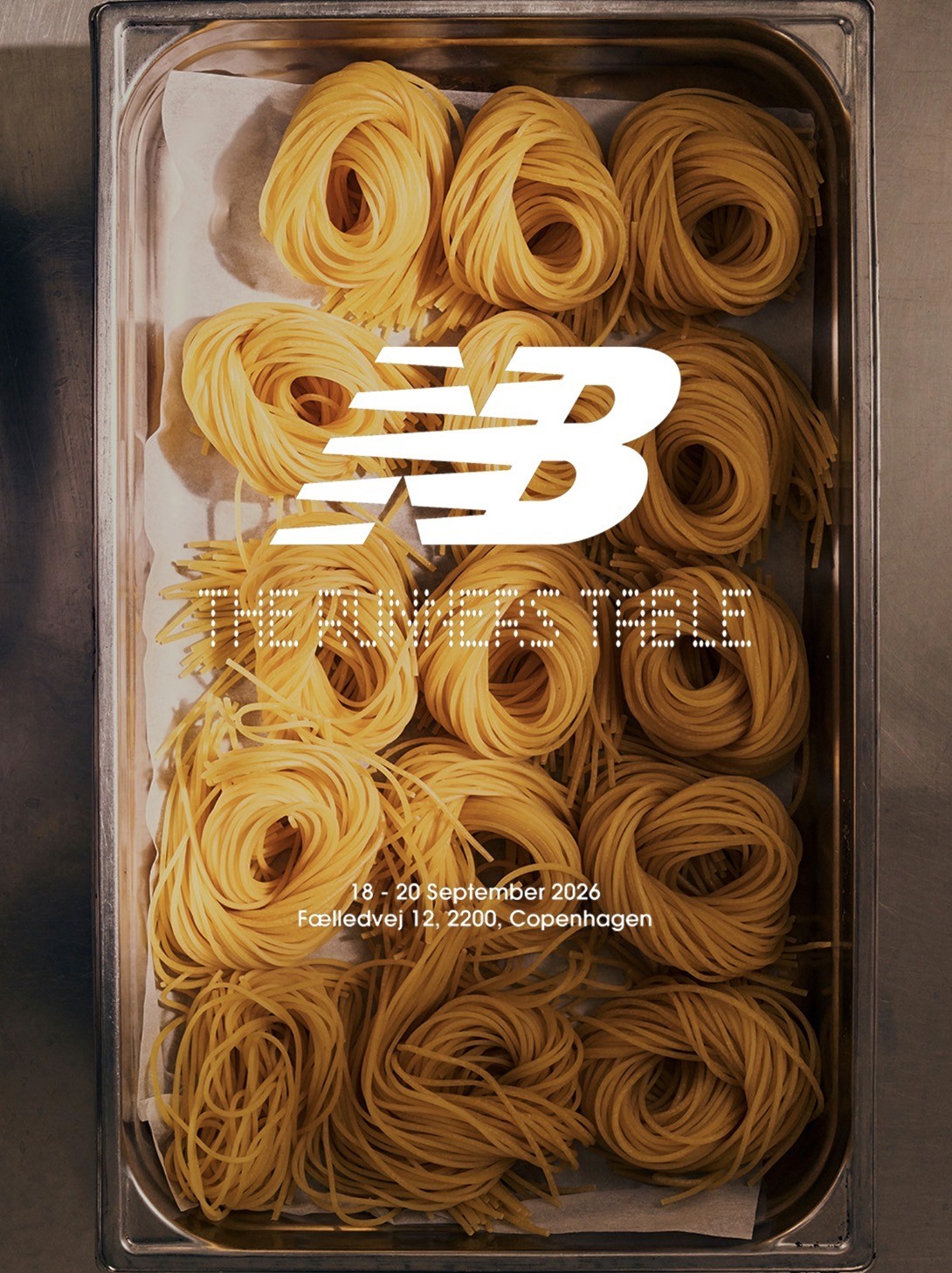
In Copenhagen, the brand’s Runners Table put its SC Rebel running shoe inside Villette, surrounded not by the usual wall of product displays, but by food, coffee, workshops and one long communal table.
There were sessions around pasta. People learned to make their own running gels. Seasonal produce sat alongside performance footwear.
It looked less like a shoe launch and more like the kind of place you might actually choose to spend an afternoon.
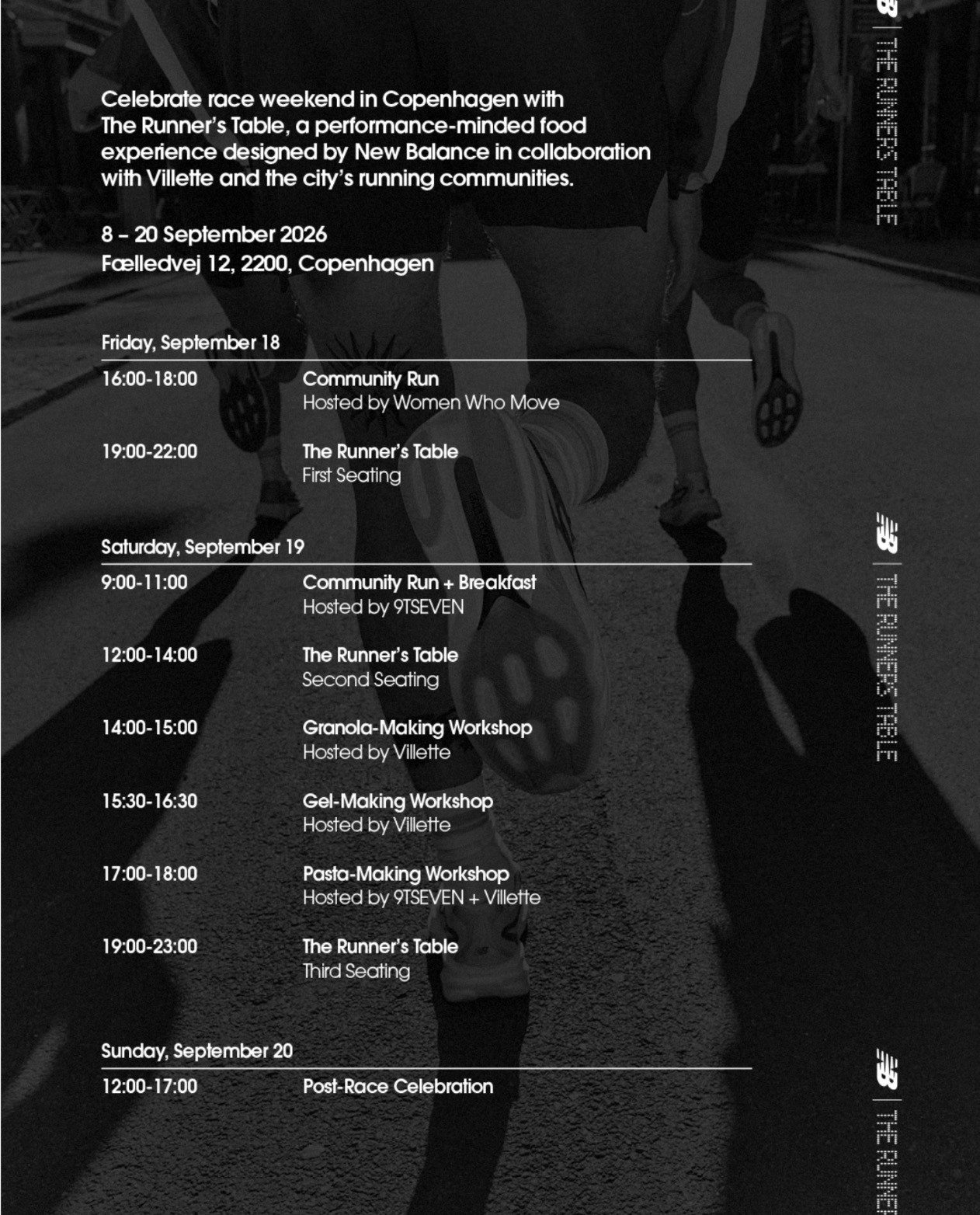
Running got a social life
The strange thing about running’s current popularity is that quite a lot of it has very little to do with running.
Of course people still care about pace, distance and whether the new carbon-plated thing on their feet will magically turn a 5K into something respectable.
But the culture around running has expanded.
There is the coffee before. The coffee after. The person you only know as “the girl from Tuesday run club.” The group chat. The bakery everyone mysteriously ends up at. The outfit that was supposedly selected for technical reasons but also happens to look very good.
A run can now function as exercise, social plan, dating pool, fashion occasion and excuse for breakfast.
Copenhagen is particularly suited to this version of it. Food and design already occupy an almost unreasonable amount of cultural space in the city, so placing a running experience around a table feels much more natural than building another fluorescent performance lab and asking everyone to discuss foam density.
Runners Table essentially treats everything surrounding the run as part of the sport.
And that is a much more interesting idea than simply launching another shoe.
The shoe is still there
This is not an altruistic dinner party. New Balance is, obviously, there to sell the SC Rebel.
But the product does not need to shout quite as loudly when everything around it makes sense.
A shoe sitting alone on a pedestal gives you something to inspect.
A shoe inside a room where people are eating, talking, learning and spending time gives it a context.
That distinction is becoming increasingly important in marketing.
Brands spent years trying to manufacture “community” by adding the word to campaign decks and inviting fifty people to stand around branded furniture.
Actual communities are harder.
They already have habits. They already have places they like. They already have jokes, rituals and reasons for meeting that existed before a marketing team arrived.
The clever move is not always to build a new world and convince people to enter it.
Sometimes it is to notice the world that is already there and become useful inside it.
New Balance did not invent post-run coffee. It did not invent runners caring about food. It certainly did not invent Copenhagen’s obsession with a beautifully set table.
It just connected the dots.
Pasta is surprisingly good marketing
There is something almost comically simple about the whole thing.
People who run need to eat.
So instead of talking endlessly about “fuel”, New Balance put food on the table.
Workshops moved between things like pasta and homemade gels — performance nutrition without making the room feel like a sports-science lecture.
That matters because modern consumers are very good at detecting when they have entered a brand activation.
The logo is there. The product is there. Everyone understands the transaction.
So the question becomes: is there any reason to stay once you have taken the photo?
Food gives people one. So does learning something genuinely useful. So does meeting someone.
The longer brands spend trying to design increasingly elaborate “immersive experiences”, the funnier it is that one of the oldest social technologies in existence still works extremely well: put people around a table.
From performance to belonging
The broader shift is happening far beyond New Balance.
Wellness used to be marketed largely as self-improvement: become faster, stronger, thinner, calmer, better.
Increasingly, its appeal is also social.
Pilates studios become friendship circles. Cold plunges become weekend plans. Run clubs become nightlife alternatives for people who would rather wake up at 7am than get home at 7am.
Fitness has started borrowing some of the functions once occupied by bars, clubs and cafés.
Brands entering that space have two options.
They can interrupt it.
Or they can make themselves useful to it.
Runners Table gets closer to the second.
There is still a commercial objective underneath everything, but it does not require pretending otherwise. The product is simply one object inside a larger ritual people already care about.
And perhaps that is why the activation feels unusually natural.
The SC Rebel is technically the reason New Balance is there.
But the table is the thing people will remember.
And in 2026, that might be the more valuable piece of marketing.
Article Tags
New Balance, Running, Copenhagen, Wellness, Community, Food, Brand Experience, Marketing