The Stories We Inherit: Inside Lebohang Kganye’s World at Fotografiska
At Fotografiska Stockholm, South African artist Lebohang Kganye brings family memories, folklore and photography to life in a house where nothing is quite as it seems.
Glow After Editorial
04 min read

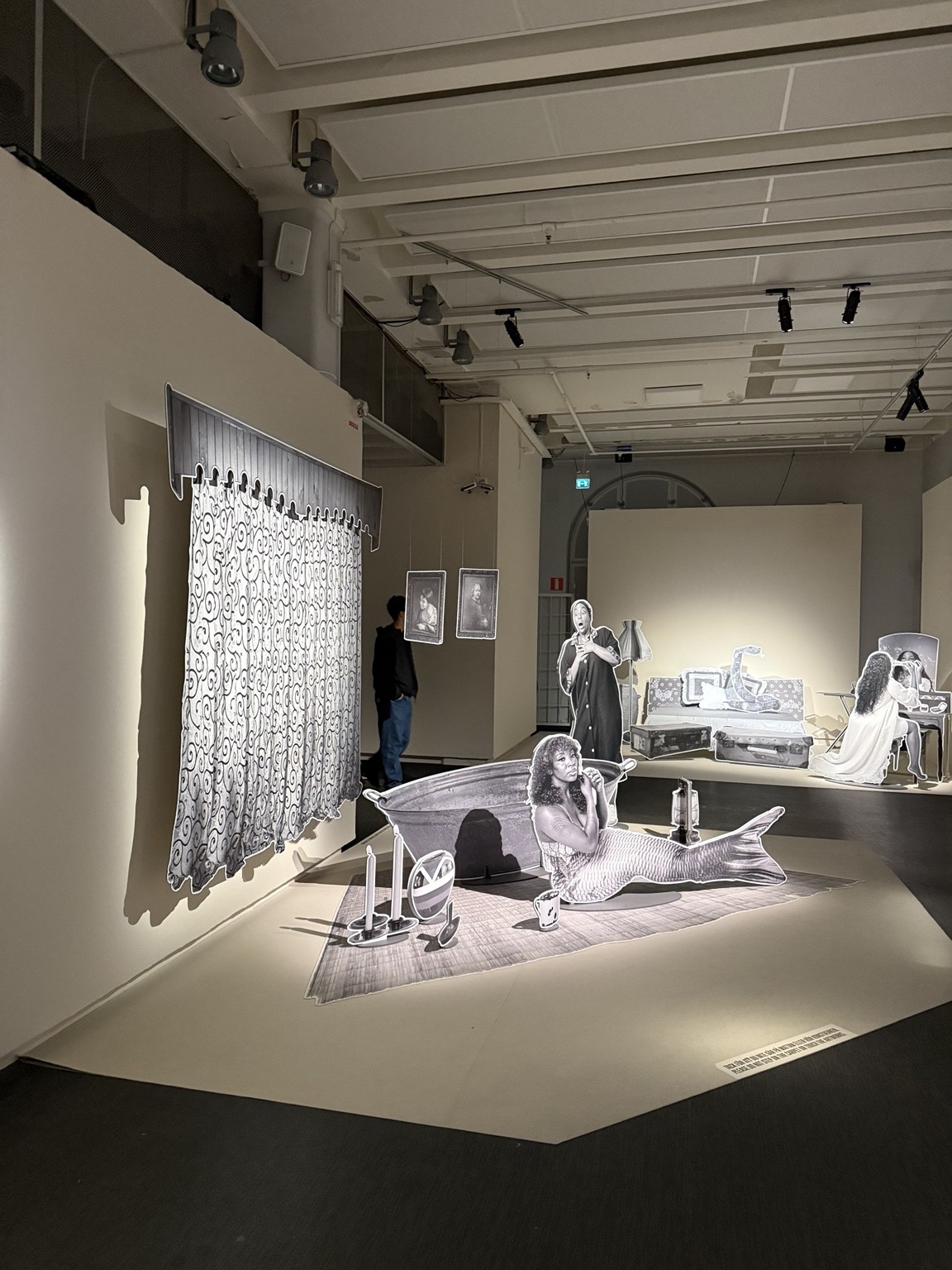
Lebohang Kganye, Le Sale ka Kgotso, installation view at Fotografiska Stockholm, 2026. Photo: Glow After.
In Stockholm, South African artist Lebohang Kganye turns photography into a house filled with family memories, strange characters and stories that refuse to stay in the past.

A woman stands in the kitchen, ready to swing a broom. A mermaid lounges beside a bathtub. In another room, familiar-looking figures appear to be caught in the middle of a family drama.
At first, it almost feels like walking into a life-sized storybook. But the stories inside Lebohang Kganye’s Le Sale ka Kgotso, now showing at Fotografiska Stockholm, are far more complicated than they seem.
Born in 1990 and based in Johannesburg, Kganye is known for taking photography beyond the traditional frame. She combines photographs with sculpture, theatrical sets and life-sized cutouts, creating spaces that visitors can physically walk through.
For Le Sale ka Kgotso, she invites us into a reconstruction of a South African RDP house, a type of housing introduced through the Reconstruction and Development Programme following the end of apartheid in 1994.
Across five staged scenes, the house becomes a place where everyday life meets folklore, superstition and family history.
A House Where Nothing Is Quite Ordinary
There’s something almost cinematic about Kganye’s installations. The figures are photographic, the rooms are carefully staged, and the scenes look as though someone has pressed pause in the middle of a film.
But instead of giving us a complete story, Kganye leaves room for interpretation.
The exhibition draws on stories she heard growing up in South African townships, including myths and supernatural beliefs passed down through generations.
Even the title has a hidden meaning.
Le Sale ka Kgotso roughly translates from Sesotho as “stay in peace”, a farewell expression used when leaving someone’s home. Yet a change in pronunciation can evoke the tokoloshe, a supernatural creature associated with mischief and danger in southern African folklore.
One expression, two completely different meanings.
It’s a fitting introduction to an exhibition about how stories change depending on who tells them, how they’re remembered and what gets lost along the way.
The Personal Story Behind the Artist
Kganye’s interest in family memories began with a deeply personal experience.
After losing her mother in 2010, she started exploring old family photographs. For her 2013 series Ke Lefa Laka: Her-story, she dressed in her mother’s clothes, recreated her poses and digitally placed herself into the original photographs.
It was a way of reconnecting with someone who was no longer there.
Over time, that personal exploration developed into a much broader artistic practice, examining family histories, identity and the legacy of apartheid in South Africa.
Her work has since reached major international institutions. In 2024, she won the Deutsche Börse Photography Foundation Prize, and in 2025, she was featured in MoMA’s New Photography: Lines of Belonging exhibition in New York.
Can a Photograph Tell the Truth?
We tend to trust photographs. They feel like proof that something happened exactly as we remember it.
But Kganye challenges that idea.
A family photograph might show who was there, what they wore and where they stood. It can’t tell us what they were thinking, what happened before the picture was taken or how the story changed years later.
That’s where imagination enters.
By turning photographs into theatrical installations, Kganye makes those missing pieces visible. The result is sometimes funny, sometimes unsettling, and often surprisingly familiar.
Because every family has its own collection of stories. Some are repeated at dinner, some are quietly forgotten, and others become so exaggerated that nobody remembers where the truth ends.
Le Sale ka Kgotso doesn’t try to separate fact from fiction. Instead, it suggests that both are part of how we understand the people and places we come from.
And perhaps that’s what makes this exhibition worth seeing. You arrive expecting photography and leave thinking about the stories in your own family.
Lebohang Kganye - Le Sale ka Kgotso
Fotografiska Stockholm, Sweden
6 March – 18 October 2026
Photography: Glow After
Article Tags
Art, Photography, Stockholm, Exhibitions